
Technical Assessment
IT maturity, risks, weaknesses, and technology gaps.
An Integrated IT Audit Platform
for Organizations with Multiple Management Levels
From Fragmented Information to Costly Decisions
In large organizations, technology decisions are made across multiple entities. Yet oversight, resource allocation, and accountability remain with senior management.
Inconsistent reports make it difficult to compare organizations and understand their actual IT performance.
Weaknesses in information security, infrastructure, and IT services may go unnoticed until they lead to more serious problems.
The relationship between spending, projects, risks, and actual organizational priorities is often unclear.
Without clearly assigned responsibilities and a defined action plan, assessments rarely lead to sustainable improvements.
Without a shared framework for measurement, organizations cannot be compared consistently or prioritized effectively.
One Platform. Multiple Levels of Oversight.
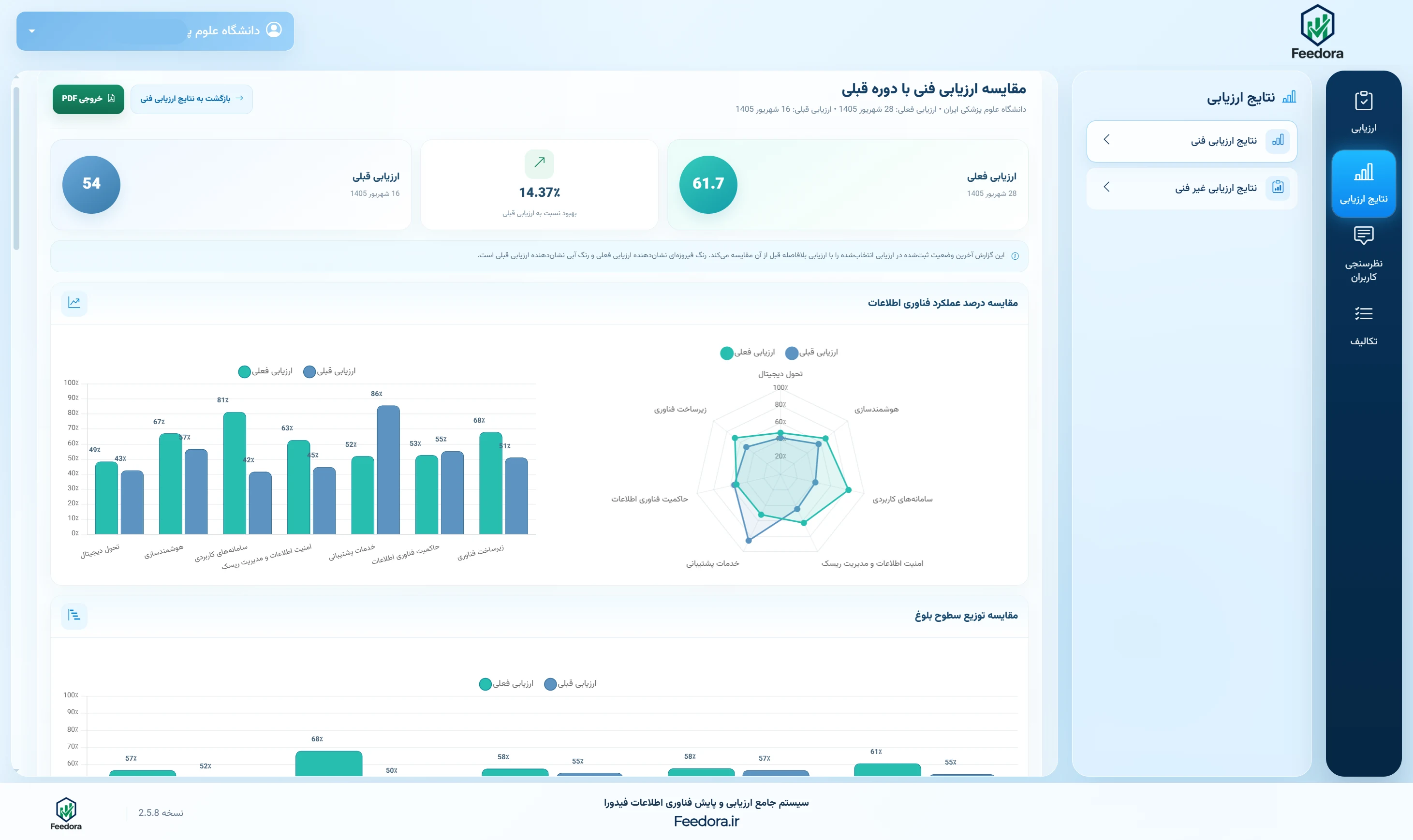
From data submitted by individual organizations to consolidated management reporting, Feedora brings assessment results together within a unified framework.
Consolidated visibility, cross-organizational comparison, analysis, and assignment of actions.
Oversight of subsidiary companies and subordinate units.
Self-assessment and submission of an action plan.
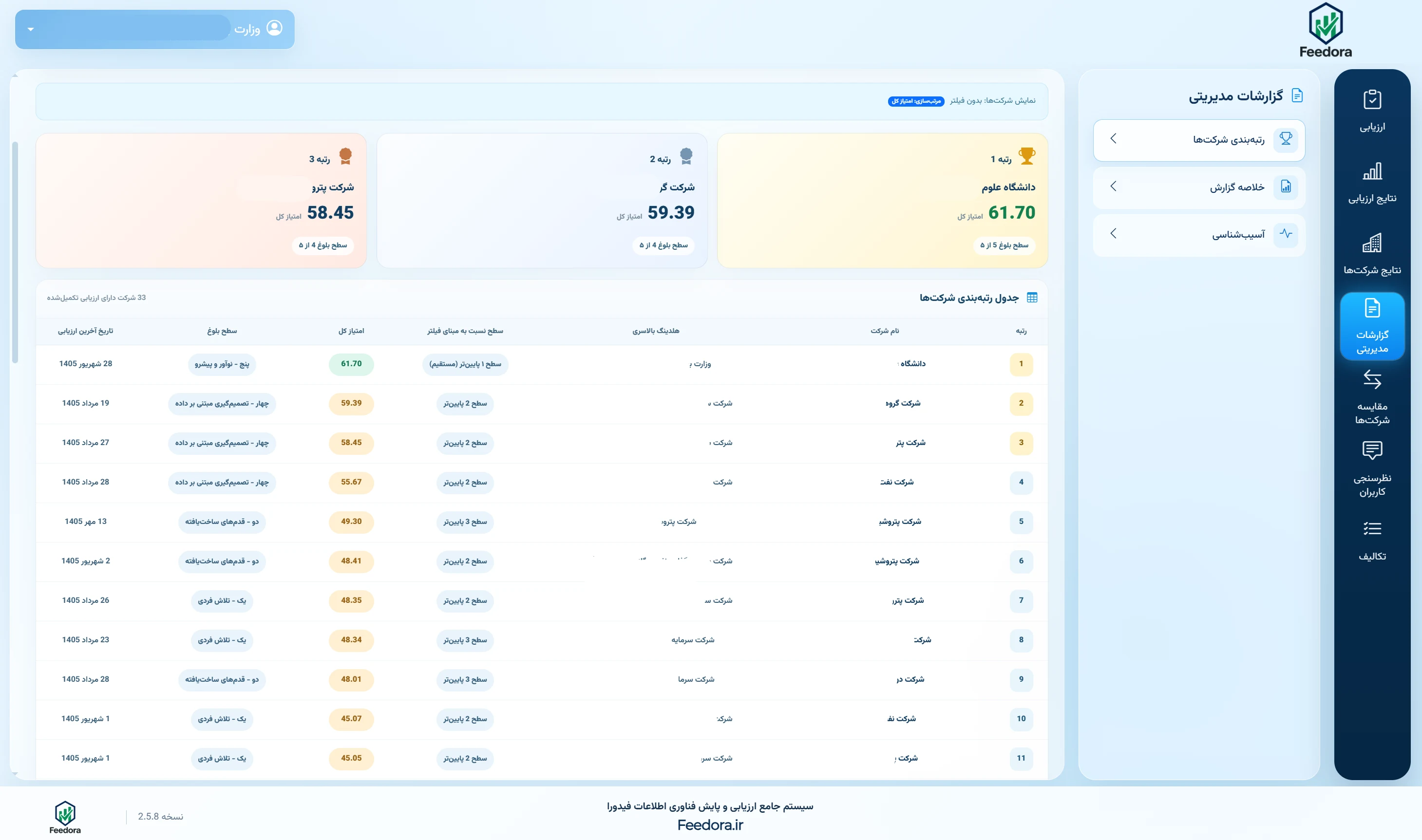
IT maturity, risks, weaknesses, and technology gaps.
Budgets, costs, human resources, projects, organizational and IT strategies, and contractor information.
Survey responses and feedback from people who use the organization's services.
Important Assessment Principle
Assessment questions are selected according to the organization's activities and scale. Organizational strategy, IT strategy, and contractor information are also considered when preparing reports and defining proportionate actions.
A Transparent and Evidence-Based Assessment
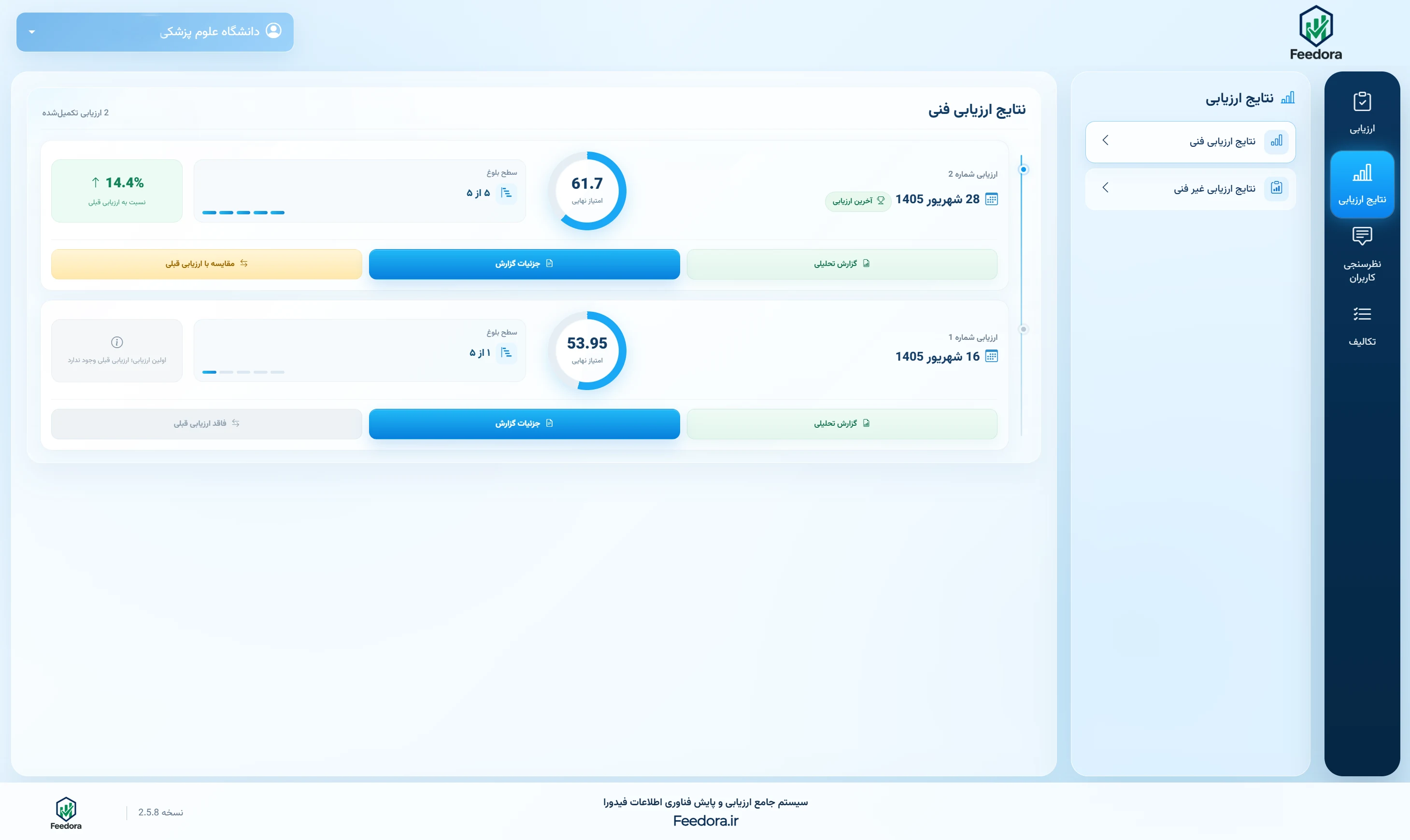
For senior executives, the final score is only part of the picture. Understanding how the score was determined and how reliable it is matters just as much.
The sources and professional frameworks behind each assessment question are identifiable.
A scoring scale from 10 to 100, developed with reference to the RADAR logic of the EFQM model.
The assessment process helps specialists understand the gap between the organization's current state and its desired level of performance.
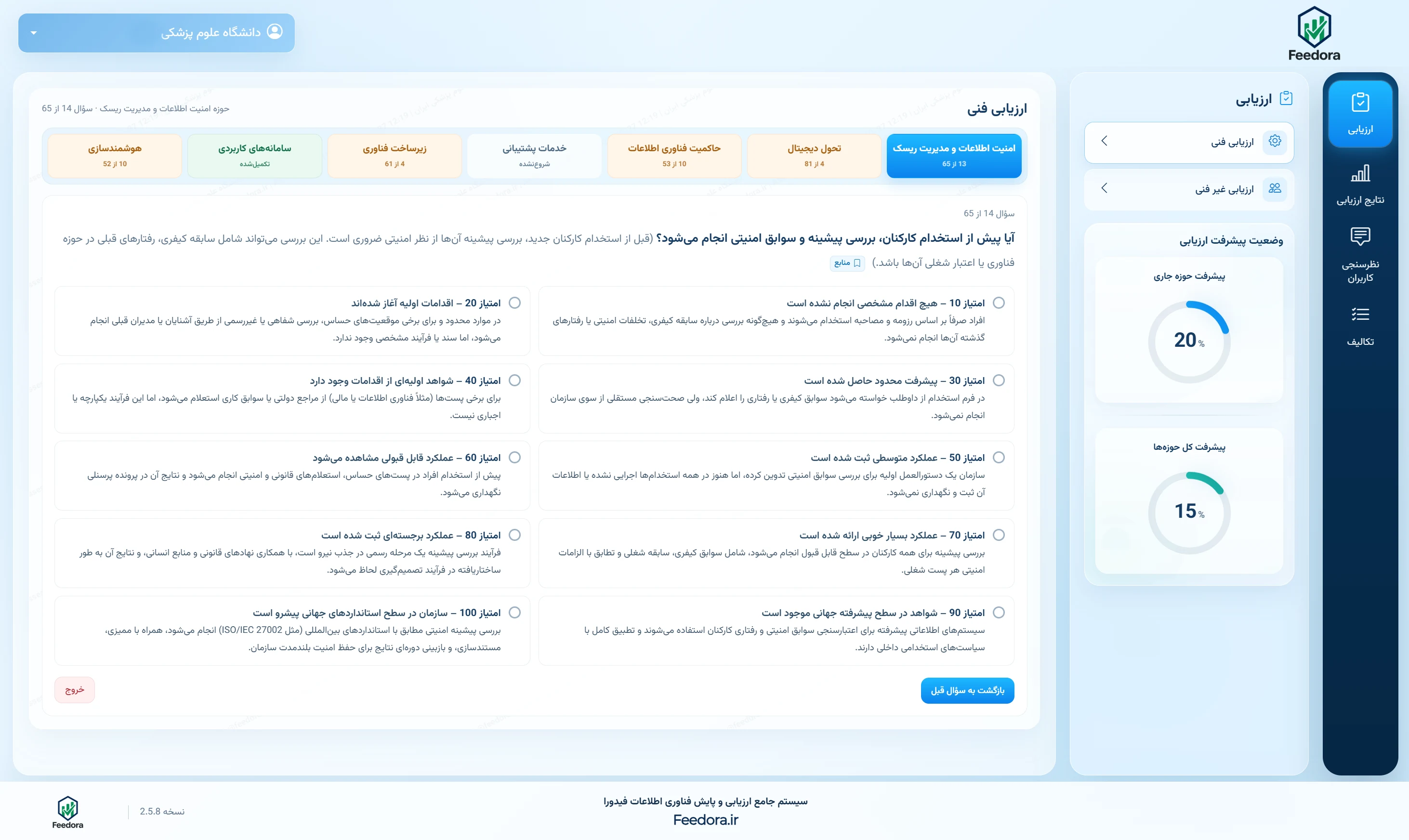
Technical assessment findings are considered alongside management data and end-user feedback.
The organization's activities and scale determine which assessment questions are relevant.
Ministries and holding companies can work with the Feedora team to adapt assessment questions and their weighting to organizational priorities, strategies, and requirements, while maintaining a consistent and evidence-based assessment framework.
Assessment Output
A clear picture of IT maturity, strengths and weaknesses, risks, and opportunities for improvement, supported by detailed analytical reports.
Turning Assessment Data into Management Insight
The IT Audit Platform consolidates and compares assessment results across subsidiary organizations, helping management identify risks, maturity gaps, and investment needs within a unified view.
What Makes Feedora Different?
Assessment results, considered alongside organizational strategy, IT strategy, and contractor information, provide the basis for defining management actions aligned with organizational objectives. Each subsidiary organization then submits an action plan, allowing progress to be reviewed and compared in subsequent assessment cycles.
Recording the organization's current state against the relevant assessment questions.
Identifying performance gaps, weaknesses, and IT risks.
Identifying which organizations and improvement actions require attention first.
Defining the actions expected by the parent organization.
The subsidiary organization prepares and submits its implementation plan.
Reviewing requirements, risks, proposed actions, and resource needs.
Reviewing submitted plans and comparing results across subsequent assessment cycles to support continuous improvement.
Focus on Actual Needs, Not Just Budget Requests
The IT Audit Platform brings budget, expenditure, and technology project information together with assessment results, helping management make more informed decisions about corrective actions, investment priorities, and resource allocation.
Which weakness could have the most significant consequences for the organization?
How much has been spent, and which requirements remain unmet?
Which actions align with the organization's current situation and ability to deliver?
NeedsRisksResources
Moving beyond fragmented requests and isolated budget proposals.
Highlighting gaps between the desired state, existing capabilities, and current expenditure.
Prioritizing significant risks and shared requirements across organizations.
Identifying opportunities for coordination and reducing duplicated efforts among subsidiary organizations.
Providing clear, evidence-based justification for resource requests and corrective actions.
Grounded in Practical Experience and Real-World Implementation
Feedora is built on the practical experience of an Iranian team in IT assessment for large organizations. This experience has been developed into a repeatable, documented, and scalable process.
Companies included in the system implementation.
Years of the team's professional experience in IT assessment.
Specialist domains covered by the assessment and analysis model.
The platform has been implemented across 34 production, service, and investment companies within one of the country's major petrochemical holding groups. According to the project documentation provided, the implementation received a letter of appreciation and a certificate of satisfactory completion.
Assessment and advisory experience across the petrochemical, oil and gas, energy, pharmaceutical, and cement industries.
Designed for multi-level organizational structures, supporting subsidiary-level assessment, holding-company oversight, and centralized management.
We welcome your questions, suggestions, and opportunities to work together.
Address
Tehran, End of Hemmat Expressway, Sarv-e Azad Residential Complex, Neighborhood House, Ground Floor
Landline
021-44757540
Mobile
09204838197
ceo@feedora.irinfo@feedora.ir